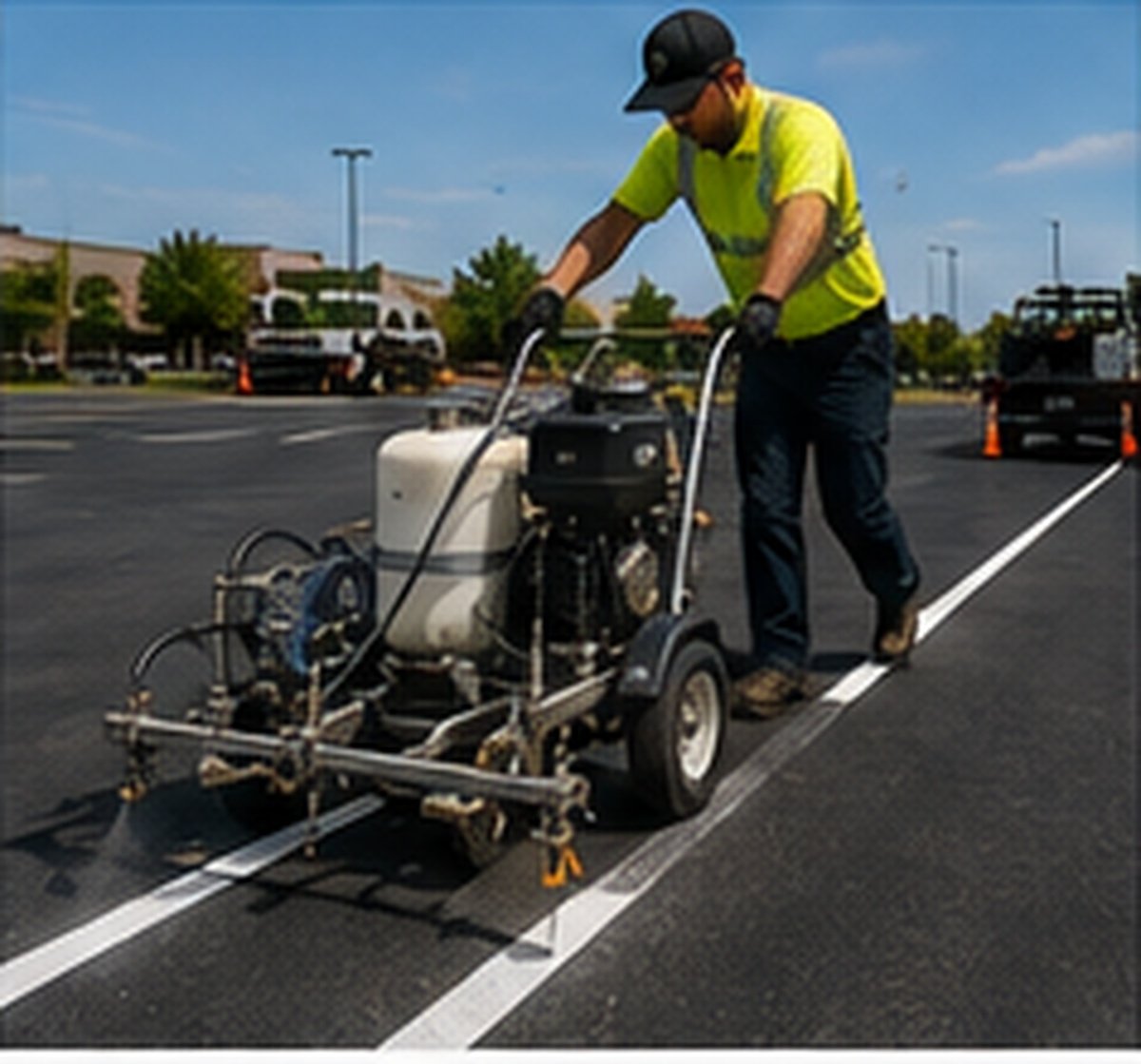
Faded Lines, Confused Traffic?
Faded or crooked lines confuse traffic and make a property look neglected — we lay them out laser-straight.
Asphalt striping fades faster than most property managers expect — sun exposure, snowplow scraping, and everyday traffic wear a fresh coat of paint down within a few years, sometimes faster on high-traffic lanes. Once lines fade past a certain point, drivers stop respecting them: cars park across two spaces, traffic flows unpredictably, and the property starts to look run-down even if the pavement underneath is in good shape.
We handle both new-layout striping — for a freshly paved or reconfigured lot with no existing markings — and restriping over existing layouts, using laser-guided equipment for straight, consistent lines instead of hand-eyeballed guesswork that drifts across a large lot. Layouts account for standard stall dimensions, fire lanes, ADA-required spaces, and traffic flow, not just a repaint of whatever was there before.
A striping job that’s just "close enough" causes problems for years afterward — stalls that are too narrow for standard vehicles, traffic lanes that don’t actually flow the way they’re supposed to, ADA spaces that end up out of compliance because nobody measured the access aisle correctly the first time. Laser-guided equipment isn’t a luxury upgrade on a striping job; it’s the difference between lines that are straight and consistent across a five-acre lot and lines that visibly drift by the time you reach the far end.
We measure the actual lot rather than assuming the old layout was correct, catching space or code issues before paint goes down.
Straight, consistent striping across the full lot, not hand-eyeballed guesswork that drifts on large properties.
Paint selected and applied for Kansas’s temperature swings, so lines cure properly and hold up through winter and summer traffic.
Photos of the finished layout for your property file, useful for future restriping cycles and property records.
| Pricing factor | How it affects your estimate |
|---|---|
| Lot size & scope | Larger lots and multi-visit contracts change per-unit pricing. |
| New layout vs. restripe | New layouts require full measurement and planning work. |
| Specialty markings | ADA stalls, fire lanes, and stencils are priced per unit/linear foot. |
Striping pricing depends on total lot size, whether it’s a new layout or a restripe of existing lines, and how many specialty markings (ADA stalls, fire lanes, arrows) are included. New layouts generally cost more than restriping existing lines since they require full measurement and planning work. We’ll walk the property and give you an itemized written estimate before any paint goes down.
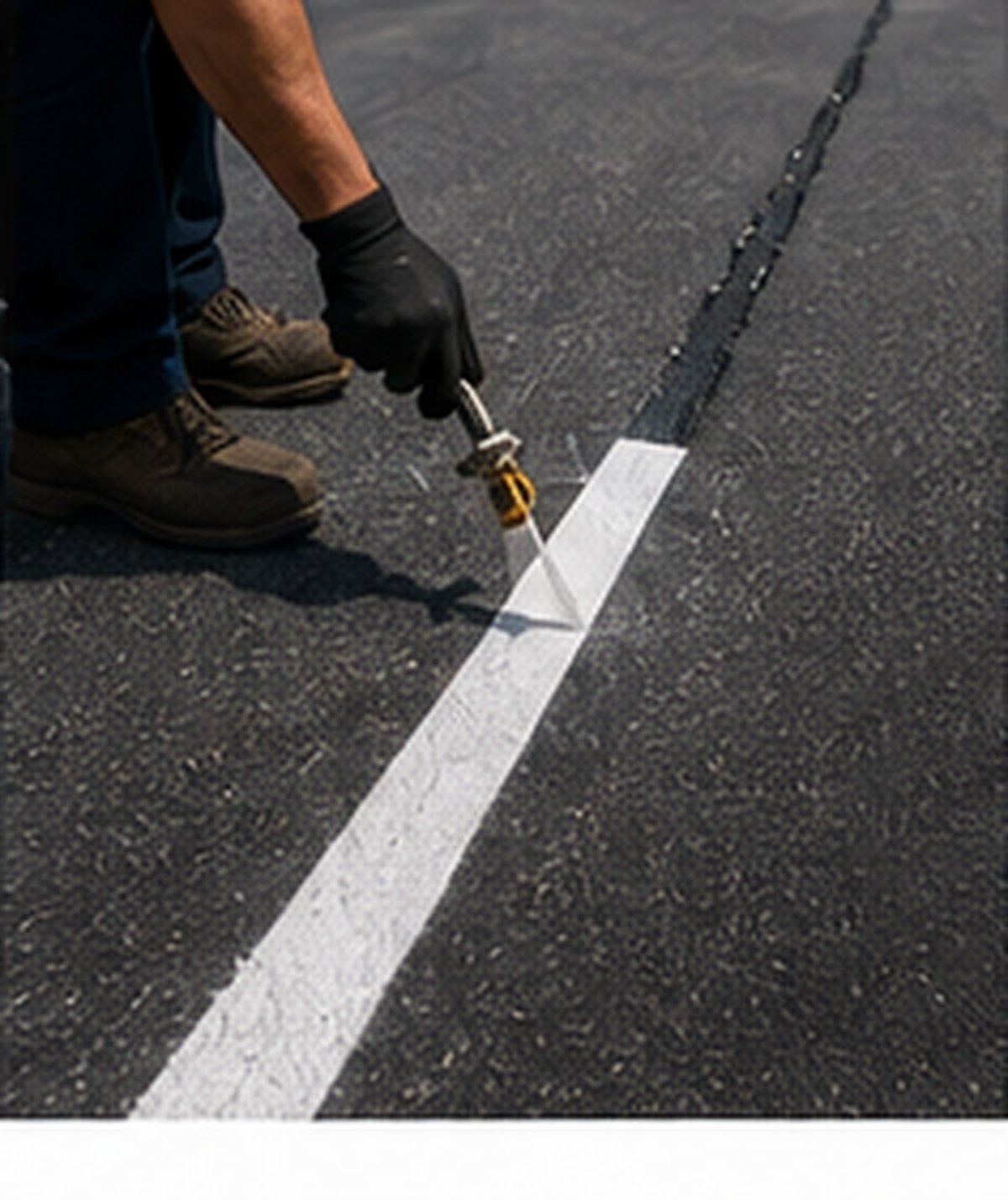
Striping is our entire business, not filler work squeezed in after a paving job. That focus means our crews run laser-guided equipment as a matter of course, not an upsell, and we plan every layout around actual stall dimensions and code requirements instead of just repainting what was already there. When we quote a restripe, you’re getting a crew whose whole reputation rests on the lines being straight.
No pressure, no obligation — just a straightforward look at your property.
You call or request an estimate. Tell us the lot size and whether it’s a new layout or a restripe.
We schedule a walkthrough, usually within the same week.
We measure and plan the layout, accounting for stall dimensions, fire lanes, and ADA requirements.
We apply the striping using laser-guided equipment and weather-appropriate paint.
We document the finished layout with photos for your property file.
Faded or barely-visible lines, drivers parking across two spaces or ignoring lane markings, a lot that looks noticeably older than the pavement underneath actually is, or a property manager who can’t remember the last time it was striped are all signs it’s time. In Wichita, spring is the ideal restriping window — after winter’s snowplow scraping and salt exposure has done its damage, and before summer heat makes scheduling tighter. If your lot hasn’t been restriped in three or more years, it’s worth a walkthrough.
Restriping is one of the cheapest line items in a property’s maintenance budget relative to the difference it makes — a fresh, accurate layout makes a lot look cared-for even if a full repave or sealcoat is still a few years out. Timing it right also protects the investment: striping applied to a freshly sealcoated or newly paved surface holds up longer than paint applied to worn asphalt, so coordinating restriping with any planned pavement work is worth a conversation before either project is scheduled.
Most commercial lots need restriping every 2-4 years, depending on traffic volume and sun exposure — high-traffic lanes fade faster than perimeter spaces.
Yes — we measure and plan a full layout from scratch, accounting for standard stall dimensions, fire lanes, ADA-required spaces, and traffic flow.
It depends on paint type and weather — we schedule around temperature and humidity so lines cure properly, and we’ll give you a specific timeline before the lot reopens to traffic.